GOOZEEZOO
GOOZEEZOO AllStar RF Node UHF 400–470MHz Raspberry Pi HAT – SR-FRS Module
GOOZEEZOO AllStar RF Node UHF 400–470MHz Raspberry Pi HAT – SR-FRS Module
Couldn't load pickup availability
🚚 Free US Shipping on Orders $100+
GOOZEEZOO AllStar RF Node UHF 400–470MHz Raspberry Pi HAT
Build your own amateur radio network node with the GOOZEEZOO AllStar RF Node SR-FRS Radio Programming Module. Designed for Raspberry Pi systems, this UHF radio HAT operates within the 400–470MHz hardware frequency range and supports integration with AllStarLink, EchoLink, APRS, and compatible digital communication applications.
Featuring an SR-FRS radio module, USB-C connectivity, programmable radio parameters, and onboard LED status indicators, it provides a compact hardware platform for amateur radio experimentation and network-connected voice communication.
Key Features
AllStarLink & EchoLink Integration
Designed for use in compatible Raspberry Pi-based amateur radio node configurations.
Supports integration with:
-
AllStarLink networked voice systems
-
EchoLink applications
-
APRS and compatible digital communication projects
-
Custom Raspberry Pi radio applications
Additional software, configuration, and supporting hardware may be required. Protocol support depends on the installed software and system configuration.
400–470MHz UHF Radio Module
Features an SR-FRS radio module with a programmable hardware frequency range of 400–470MHz.
The module is intended as a pin-compatible alternative to SA818-based radio hardware in suitable applications.
Actual permitted transmitting frequencies depend on local regulations and licensing requirements.
Compatible with Raspberry Pi Systems
Designed for compatible Raspberry Pi models, including:
-
Raspberry Pi 2
-
Raspberry Pi Zero
-
Raspberry Pi Zero 2 W
-
Raspberry Pi 3 / 3B
-
Raspberry Pi 4 / 4B
Communicates with the Raspberry Pi through the included USB-C cable and compatible USB interface.
USB-C Communication & Programming
Features separate connection functions indicated on the board:
-
PWR + COS (Flashing): USB communication with the Raspberry Pi for the main node interface
-
PWR (Green): Radio programming connection for adjusting supported UHF parameters
The programming interface may appear as /dev/ttyUSB0 under Linux, depending on the connected USB devices and operating system configuration.
Programmable Radio Parameters
Supports radio configuration through compatible programming software.
Available programming sections include:
-
Radio: Configure frequency, tone, and squelch settings
-
Volume: Adjust audio output level
-
Filters: Configure supported filtering options
-
Version: Display radio firmware information
DCS code programming is not currently supported.
Onboard LED Status Indicators
The SR110U board provides visual operating indicators:
-
PTT – Flashing Red: RF transmission active
-
COS – Blue: RF receive activity detected
-
COM – Yellow: Communication or audio data activity
-
PWR: Power supply status
Indicator behavior may depend on the installed firmware and operating configuration.
Compact Raspberry Pi HAT Design
Provides a convenient platform for building portable or fixed-location amateur radio nodes.
Suitable for AllStarLink experimentation, EchoLink projects, and Raspberry Pi-based UHF communication systems.
Technical Specifications
-
Brand: GOOZEEZOO
-
Product Type: UHF RF Node / Raspberry Pi Radio HAT
-
Radio Module: SR-FRS
-
Board: SR110U
-
Operating Frequency Range: 400–470MHz
-
Frequency Programming: Supported
-
Interface: USB-C
-
Linux Serial Interface: Typically
/dev/ttyUSB0(System-Dependent) -
Supported Applications: AllStarLink / EchoLink / Compatible APRS and Digital Projects
-
Radio Configuration: Frequency / Tone / Squelch / Volume / Filters
-
DCS Programming: Not Supported
-
Status Indicators: PTT / COS / COM / PWR
-
Raspberry Pi Compatibility: Pi 2 / Zero / Zero 2 W / 3 / 3B / 4 / 4B
-
Applications: Amateur Radio Nodes / UHF Radio Projects / Raspberry Pi Communications
Package Includes
-
1 × SR-FRS Radio Programming Module / Raspberry Pi HAT
-
1 × USB-C Cable
-
1 × Antenna
Note: Raspberry Pi board, power supply, enclosure, and other accessories are not included.
Software & Configuration Resources
SR-FRS Programming Software:
https://github.com/jumbo5566/SRFRS
SA818 Module Configuration Reference:
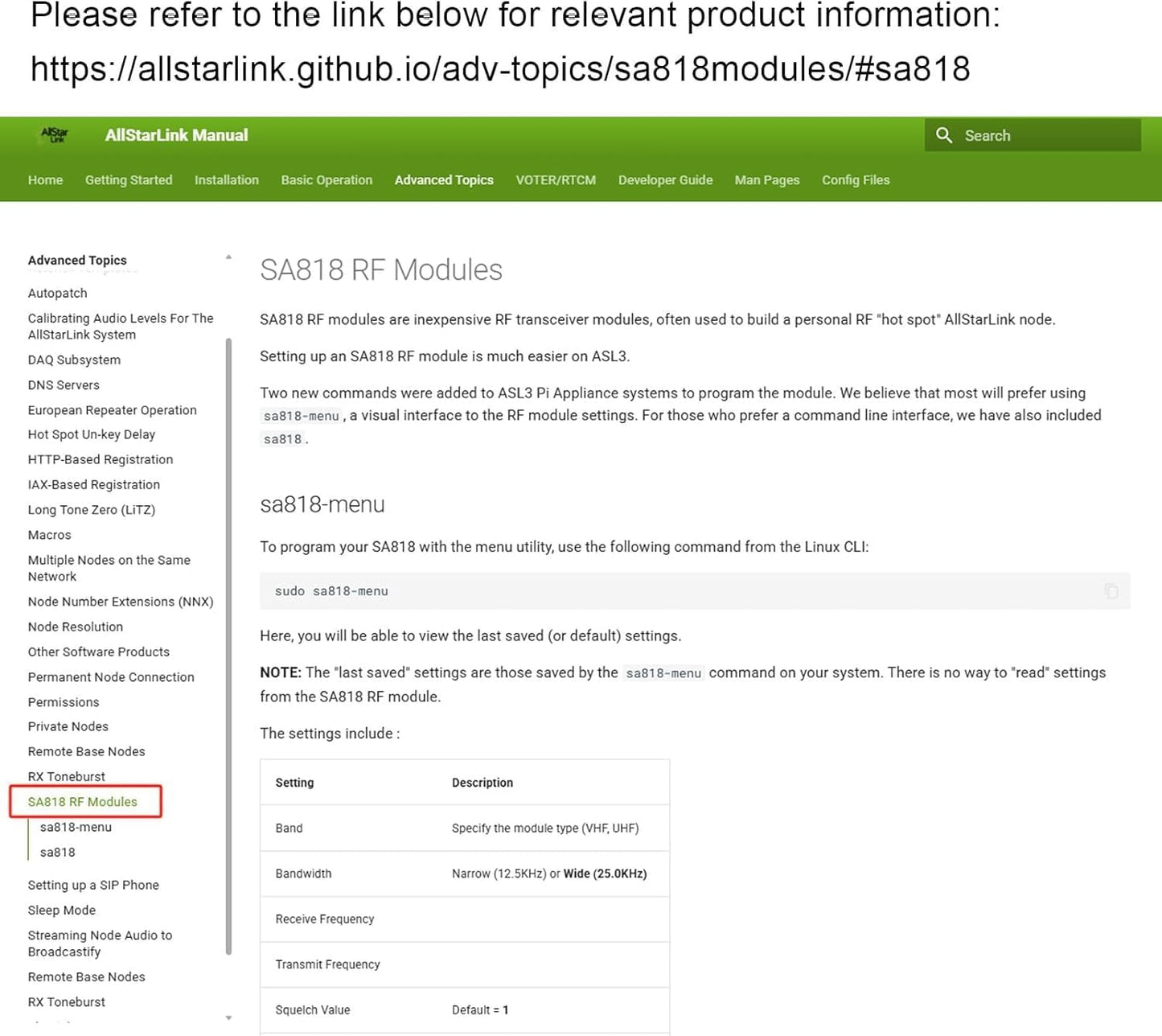
https://allstarlink.github.io/adv-topics/sa818modules/#sa818
These resources provide reference information for compatible radio programming and configuration.
Software compatibility may vary depending on operating system, module firmware, and hardware revision.
Installation & Usage Notes
-
Prepare a compatible Raspberry Pi with the required operating system and radio node software.
-
Connect the SR-FRS module using the appropriate Raspberry Pi HAT interface and supplied USB-C cable.
-
Confirm that the USB connection is fully inserted and recognized by the operating system.
-
Identify the correct serial device before programming the radio module.
-
Configure the permitted UHF operating frequency, tone, squelch, and other required parameters.
-
Connect the supplied antenna before RF transmission.
-
Configure the appropriate AllStarLink, EchoLink, or other supported application.
-
Verify PTT, COS, audio, and communication functions before normal operation.
Important:
-
This product is not a standalone AllStarLink or EchoLink node. A compatible Raspberry Pi and properly configured software are required.
-
The 400–470MHz range describes the module's hardware tuning capability, not permission to transmit throughout that range.
-
Transmission must comply with local frequency allocations, licensing requirements, and applicable radio regulations.
-
FRS and other regulated radio services may impose equipment certification and operating restrictions.
-
DCS programming is not currently supported.
-
If transmission does not operate as expected, review PTT, COS, audio routing, and software configuration. VOX may be applicable in certain supported configurations.
Frequently Asked Questions
Q: What is this module used for?
It provides UHF radio hardware for compatible Raspberry Pi-based amateur radio node projects, including AllStarLink and EchoLink applications.
Q: Does it support Raspberry Pi 4?
Yes. It is designed for compatible Raspberry Pi 4 and 4B configurations.
Q: What frequency range does the module support?
The hardware supports programming within 400–470MHz. Legal transmitting frequencies depend on your location and authorization.
Q: Does it support APRS?
It can be used in compatible APRS-related projects with suitable software and configuration. APRS functionality is not provided automatically by the hardware alone.
Q: Can I program the operating frequency?
Yes. Compatible software can configure supported radio parameters, including frequency, tone, squelch, and volume.
Q: Does it support DCS codes?
No. DCS programming is not currently supported.
Q: Does the package include a Raspberry Pi?
No. The package includes the SR-FRS module, USB-C cable, and antenna. A Raspberry Pi must be supplied separately.
Share