GOOZEEZOO
Radioberry Preamp Board V2, 3–5W HF RF Amplifier for Radioberry SDR & Raspberry Pi 4/4B
Radioberry Preamp Board V2, 3–5W HF RF Amplifier for Radioberry SDR & Raspberry Pi 4/4B
Couldn't load pickup availability
🚚 Free US Shipping on Orders $100+
Upgrade Your Radioberry SDR with 3–5W HF Output
Expand your Radioberry SDR setup with the Radioberry Preamp Board V2. Designed to work with Radioberry and Raspberry Pi 4/4B systems, this compact RF amplifier board provides 3–5W HF output for QRP amateur radio operation and SDR experimentation.
Key Features
3–5W HF Power Output
The upgraded V2 amplifier delivers approximately 3–5W RF output, providing increased transmitting power compared with the previous version.
1–50 MHz RF Frequency Range
Designed for HF amplification across 1–50 MHz, supporting SSB, FM, and AM operation.
Designed for Radioberry SDR
Works with compatible Radioberry SDR boards to create a compact Raspberry Pi-based QRP transceiver system.
6–8V Power Input
Operates with a specified 6–8V power supply, with 8.4V listed as the preferred supply voltage. Features SMA RF input and output connections.
Compact QRP Radio Expansion
Suitable for amateur radio experiments, portable SDR projects, and integration with compatible external RF amplifier systems.
Technical Specifications
| Specification | Details |
|---|---|
| Product Version | V2 |
| RF Frequency Range | 1–50 MHz |
| RF Output Power | 3–5W |
| Power Input | 6–8V (8.4V Preferred) |
| RF Connectors | SMA Input / SMA Output |
| Supported Modes | SSB / FM / AM |
| Compatibility | Radioberry SDR, Raspberry Pi 4/4B Systems |
Package Includes
-
1 × Radioberry Preamp Board V2
-
3 × SMA Cables (RX / TX / ANT)
-
1 × 8V Battery Power Cable
-
1 × Pin Header
-
4 × Screws and Nuts
-
8 × Plastic Standoffs
Radioberry SDR board, Raspberry Pi, external power supply, and antenna are not included.
Important Notes
This product is intended for users with basic knowledge of SDR systems, Raspberry Pi, and RF electronics. Advanced configuration and custom applications may require additional technical expertise.
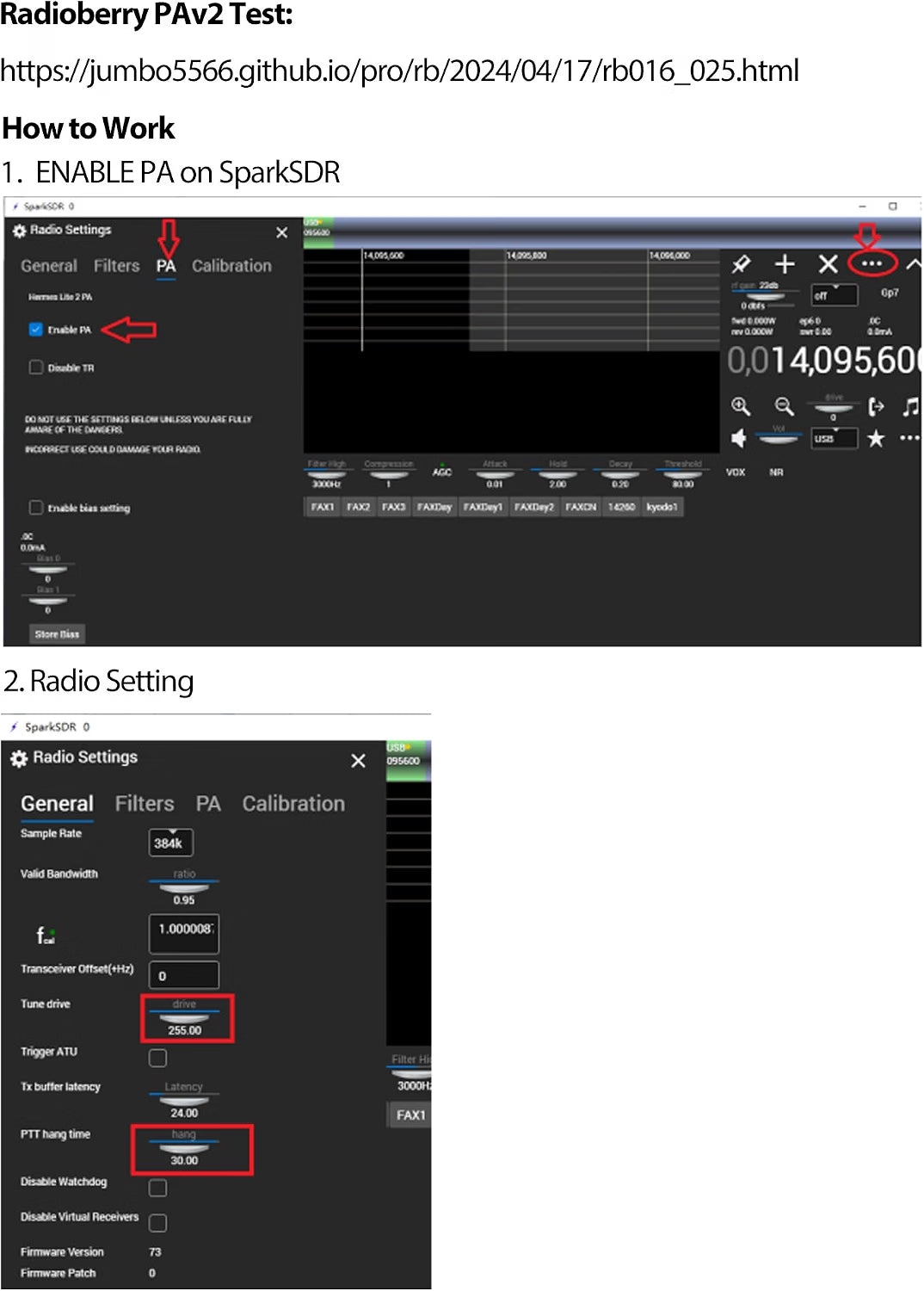
For prolonged transmission, proper bias adjustment and adequate cooling are recommended. A small cooling fan may help manage operating temperatures.
Use appropriate RF filtering, antenna matching, and applicable amateur radio operating practices when transmitting.
Share